Computational Photography: The Future of the Image
Discover how AI is revolutionizing photography with computational photography. Explore the innovations that are redefining the future of photography.
Introduction
Computational photography represents one of the most remarkable revolutions in the history of imaging. At the intersection of traditional photography and artificial intelligence, this approach radically transforms our way of capturing, processing, and interpreting visuals. As photographic sensors reach their physical limits, AI algorithms open up possibilities that were unthinkable just a few years ago. This article explores in depth what the future holds for computational photography and how it is redefining the boundaries of visual creation.
The foundations of computational photography
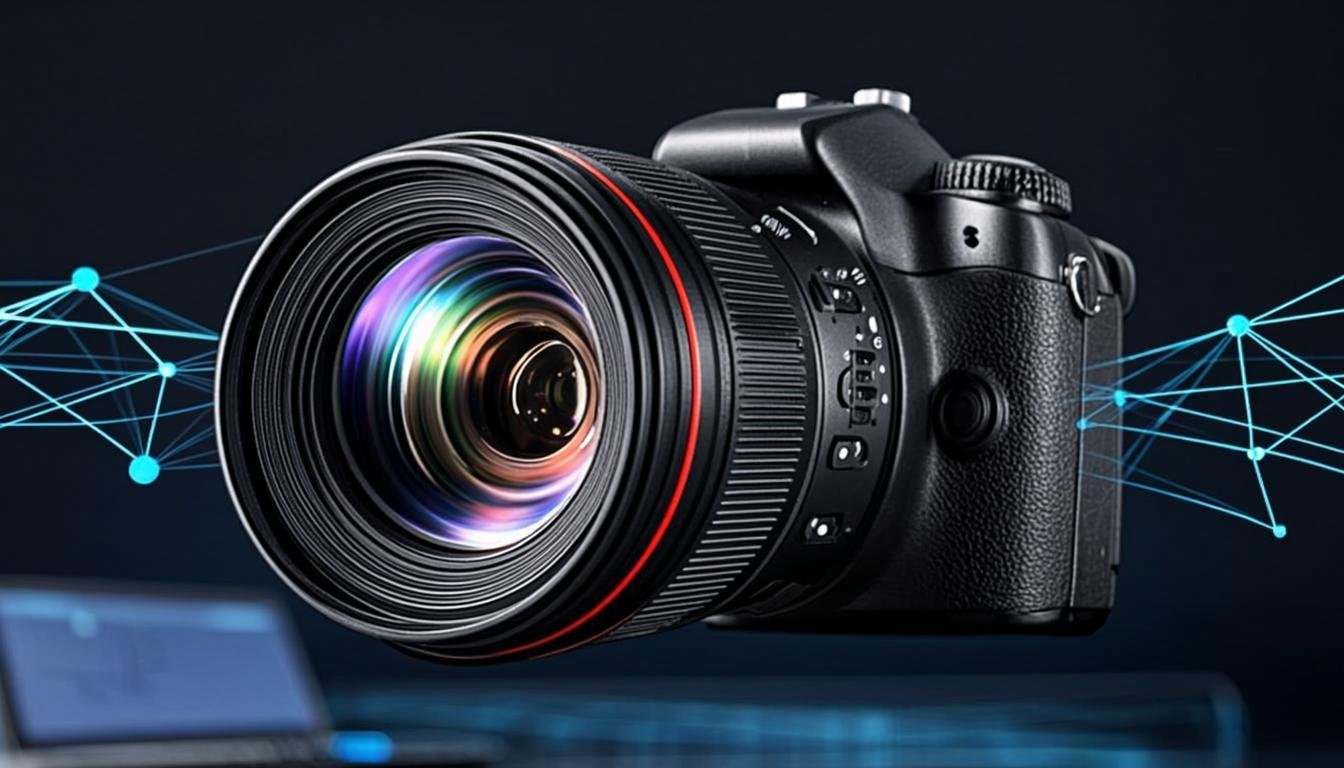
Computational photography refers to all techniques that use computer processing to enhance or extend the capabilities of a camera. Unlike traditional photography where the image is captured as is, computational photography relies on algorithms to interpret and transform the raw data captured by the sensor.
This approach has been popularized by smartphones, which now integrate increasingly powerful sensors coupled with dedicated image processing chips. Apple with its Deep Fusion, Google with its Night Sight, and Samsung with its Scene Optimizer are all concrete examples of computational photography in action.
The principle is based on three pillars:
- The capture of multiple images in rapid sequence
- The analysis of these images by AI algorithms
- The reconstruction of an optimized final image
These techniques make it possible to achieve spectacular results in conditions that were once extreme, such as low light or rapid movement.
AI at the heart of photographic innovation
Artificial intelligence is truly the engine of modern computational photography. Thanks to machine learning and deep learning, systems can now recognize scenes, automatically adjust technical parameters, and even suggest optimal compositions.
Convolutional neural networks (CNNs) analyze millions of images to learn how to recognize objects, faces, landscapes, and apply appropriate corrections. This technology enables improvements that go far beyond simple technical adjustments.
For example, AI can now:
- Restore blurry or poor-quality images
- Remove unwanted elements from a photo
- Enhance the dynamic range of high-contrast images
- Simulate complex optical effects
- Create realistic bokeh portraits even with compact sensors
These capabilities were once reserved for professionals equipped with specialized software like Photoshop. Today, they are integrated directly into our smartphones, thus democratizing cutting-edge techniques.
The Future of Computational Photography
Augmented Reality and Immersive Photography
The convergence of computational photography and augmented reality opens up fascinating possibilities. In the future, we will be able to capture not just an image, but a complete scene with its different layers of information. Devices will be able to record depth, movement, sounds, and even the temperature of the environment.
The applications are immense: immersive augmented reality experiences, precise 3D reconstructions for architecture, or detailed environmental analyses. Computational photography will thus become a multidimensional capture tool rather than a simple flat image.
Predictive Photography
Thanks to AI, future cameras will be able to anticipate scenes before they even happen. By analyzing movements, patterns, and context, the camera can automatically adjust to capture the optimal moment.
Imagine a camera that detects a child about to smile and captures the perfect moment without any intervention. Or a system that anticipates the movement of a wild animal and adjusts the focus and exposure accordingly. Photography will thus become a more intuitive and spontaneous experience.
Computational Photography and Ethics
With these major advances also come important ethical questions. The manipulation of images using AI raises concerns about the authenticity of photographs and the trust we can place in the images we see.
Initiatives like the Content Authenticity Initiative (CAI) are seeking to develop standards to certify the origin and modifications made to images. In the future, we may be able to verify the complete history of an image, from its capture to its publication.
Technical and Artistic Challenges
Despite its promises, computational photography faces several challenges. The first concerns energy consumption. Complex algorithms require significant computing power, which can quickly drain the batteries of mobile devices.
The second challenge is the preservation of human creativity. While algorithms can technically optimize an image, the artistic vision and creative intent remain fundamental aspects of photography. The future probably lies in a synergy between AI and the photographer, where technology serves as an extension tool rather than a replacement.
Finally, the standardization of results is questionable. With algorithms that automatically apply corrections, is there a risk of obtaining all similar images, thus losing the diversity of styles and visions that make photography so rich?
Professional Applications of Computational Photography
Beyond consumer applications, computational photography is also transforming professional practices. In the medical field, for example, it improves diagnostic imaging with algorithms that detect anomalies invisible to the naked eye.
In the automotive industry, driver assistance systems use computational photography techniques to interpret the environment in real-time and ensure passenger safety.
In the space sector, satellites equipped with computational sensors can capture and analyze Earth's data with unparalleled precision, thus helping with climate monitoring, precision agriculture, or natural disaster management.
Computational Photography and Post-Production Work
Computational photography is not limited to image capture; it also radically transforms post-production work. Tools like AllCombiner now allow for the intelligent combination of multiple images to create results that were once impossible or required hours of manual work.
These platforms use AI to analyze source images and determine the best way to merge them, whether to create perfect HDRs, high-resolution images from multiple shots, or complex creative effects. Automating repetitive tasks thus frees up photographers' time to focus on what matters most: creativity.
Impact on the Photography Industry
The rise of computational photography is redefining the photography industry as a whole. Camera manufacturers must now not only improve sensors but also develop increasingly powerful image processing chips.
This creates a new technological competition where algorithmic innovation becomes as important as optics. Brands that succeed in developing unique and high-performing systems will gain a significant competitive advantage in the market.
On the side of imaging professionals, the demand for skills in image processing and AI is rapidly increasing. Photographers must not only master traditional techniques but also understand how to leverage the new possibilities offered by computational photography.
Conclusion
Computational photography undoubtedly represents the future of imaging. By combining AI technological advances with photographic tradition, it opens up creative and technical possibilities previously unimaginable. Whether for capturing scenes in extreme conditions, improving image quality, or creating immersive experiences, this revolution is transforming how we interact with visuals.
For both professional photographers and amateurs, the future lies in adopting these technologies while preserving the artistic vision that gives photography its strength. Platforms like AllCombiner and their accessible Pricing already allow users to leverage these innovations, whether for personal or professional projects.
As we move toward a future where the boundary between reality and digital image becomes increasingly tenuous, one thing is certain: computational photography will continue to push the boundaries of what is possible, offering new ways to capture, share, and explore our world.
Related articles