AI and Fusion: Current Limitations and Solutions
Discover the limits of AI fusion and how to overcome them to improve the quality of your images with innovative solutions.
Introduction
Artificial intelligence has revolutionized many fields, and photography is no exception. AI image fusion tools promise spectacular results, but like any emerging technology, they have limitations. In this article, we will explore the current constraints of AI fusion and strategies to overcome them, in order to obtain professional-quality images despite the technical challenges.
The fundamental limitations of AI fusion
Variable quality of results
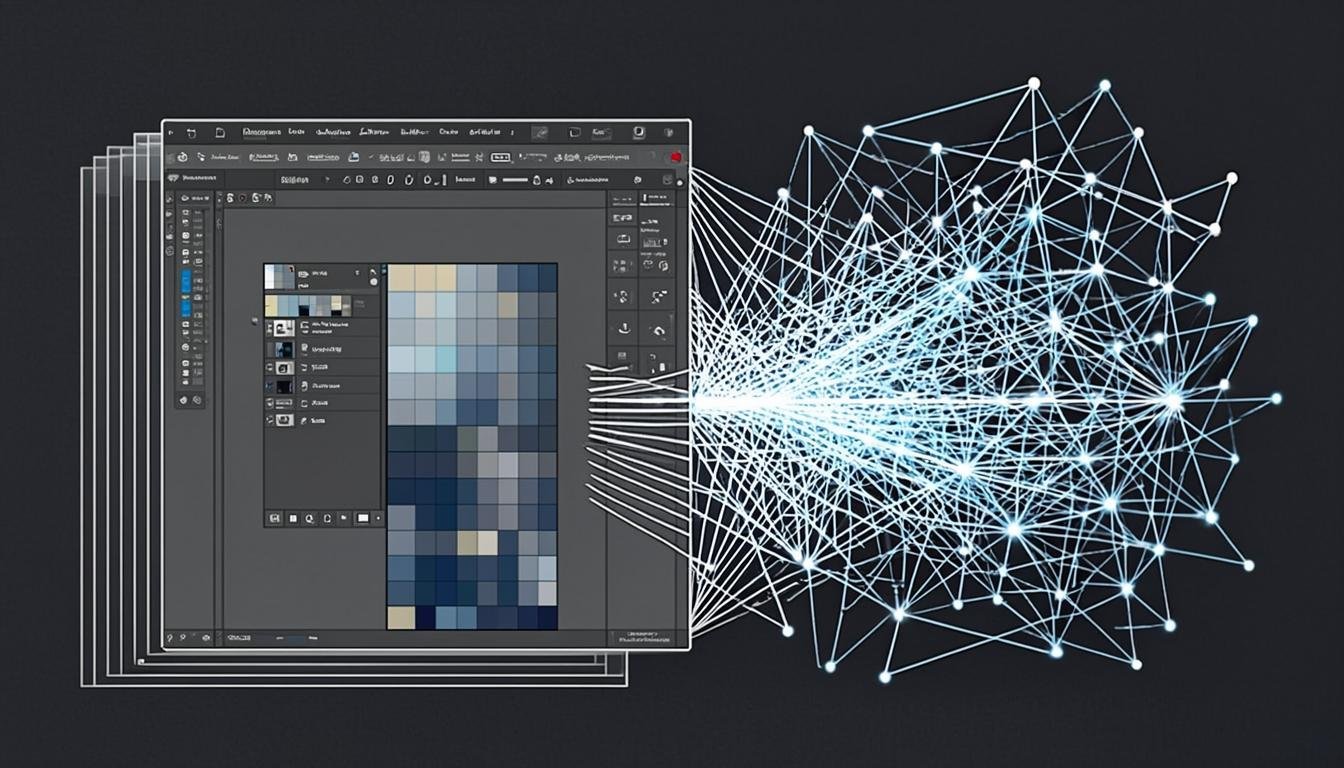
Despite recent advances, the quality of AI fusions remains inconsistent. Algorithms often struggle to handle complex scenes with multiple moving elements or significant lighting variations. Visual artifacts, poorly defined edges, and inconsistent colors are recurring problems that affect the final quality of the images.
Fusion constraints become particularly evident when processing high-resolution photos where the slightest flaw becomes visible. Current models have difficulty maintaining consistency of details across different parts of the image, which limits their use for demanding projects.
Technical and hardware limitations
The AI image challenges are not only related to algorithms, but also to the resources required to run these systems. State-of-the-art models require considerable computational power, making them inaccessible to many professional users.
Furthermore, the dependence on training data creates an inherent bias. AI is better at fusing images that match the styles and scenes on which they were trained, which limits their adaptability to atypical or creative situations.
Ethical and legal constraints
Intellectual property issues
When AI fuses multiple images, the question of intellectual property becomes complex. Who is the author of the final image? The user who provided the sources, the developer of the algorithm, or the AI itself? This legal ambiguity hinders the adoption of these technologies in professional contexts where clarity of copyright is essential.
Right to one's image
AI fusion tools also raise ethical questions regarding the right to one's image. When elements from different people are combined to create a new image, issues of consent and representation become crucial, particularly in portrait photography where visual identity is paramount.
Strategies to overcome the limitations of AI fusion
Algorithm improvement
Researchers are constantly working to improve AI fusion algorithms. Recent approaches incorporate more sophisticated deep learning techniques capable of understanding the semantic context of images rather than simply combining pixels. These advances promise to reduce artifacts and improve the visual consistency of the results.
Hybrid solutions combining AI and human expertise
A promising approach involves combining AI and human expertise. Tools like AllCombiner use AI to perform repetitive and technical tasks, while leaving the final creative control to professionals. This synergy allows for bypassing technical limitations while preserving artistic quality.
Resource optimization and accessibility
To make AI fusion more accessible, developers are working on optimizing algorithms to reduce computational resource requirements. Cloud solutions like the one offered by AllCombiner allow users to access processing power without requiring expensive hardware, thus democratizing access to these technologies.
Future perspectives for AI fusion
Technological evolution
Progress in the field of generative AI is accelerating, with increasingly capable models of understanding and manipulating abstract concepts rather than just pixels. This evolution should significantly reduce the current limitations of AI fusion, paving the way for creative applications previously inaccessible.
New fields of application
As technical constraints decrease, new fields of application are emerging. From medical photography to digital art, through industrial design, AI fusion offers creative and functional possibilities that are transforming many sectors.
Conclusion
Although the current limitations of AI fusion present significant challenges, emerging solutions and innovative approaches allow for overcoming these constraints. By combining technological power and human expertise, it is possible to achieve professional-quality results despite technical challenges.
If you are looking to explore the potential of AI fusion for your photographic projects, we invite you to discover AllCombiner, our platform designed to overcome the current limitations of the technology. With pricing tailored to all needs, you can start experimenting with these innovative tools today and transform your approach to fused photography.
Related articles